Digital Second Brain: How to Build a "Retrievable" Knowledge Base Instead of Just "Storing" One
Digital Second Brain: How to Build a "Retrievable" Knowledge Base Instead of Just "Storing" One When building a knowledge base (using too…
Verification report
Digital Second Brain: How to Build a "Retrievable" Knowledge Base Instead of Just "Storing" One
When building a knowledge base (using tools like Notion, Obsidian, or Logseq), the most common trap people fall into is turning it into a "digital junkyard": hoarding web clippings and copy-pasting articles, only to feel overwhelmed by thousands of notes when actually needing to retrieve information.
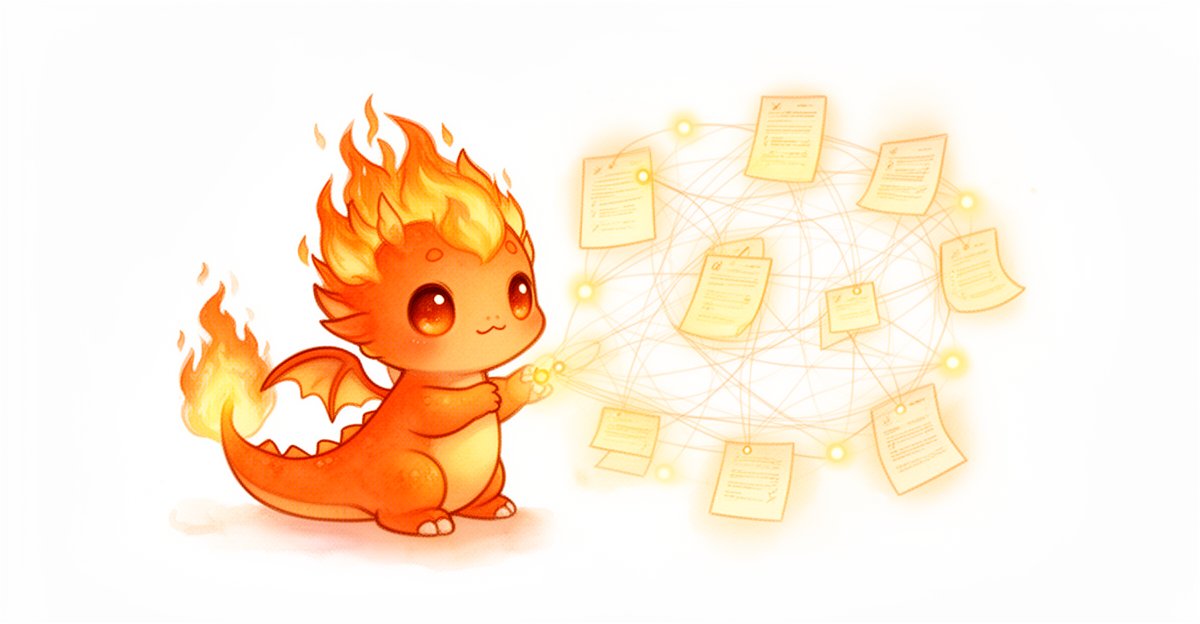
This phenomenon is known as the "Collector's Fallacy"—the mistaken belief that saving information to a database is equivalent to mastering knowledge. The core of a truly efficient digital second brain lies not in "storage," but in "retrievability" and "connectivity."
Core Logic: Shifting from "Categorized Storage" to "Tag Networks"
Traditional folder categorization (e.g., /Learning/Programming/Python) fails when handling complex knowledge because a single knowledge point often spans multiple domains. We need to establish a system based on atomic notes and bidirectional links.
1. Atomic Notes
Each note should record only one independent concept or idea.
- Wrong Approach: Writing a 5,000-word essay titled "All Thoughts on Productivity."
- Right Approach: Breaking it down into three short notes: "Time Blocking Method," "Energy Management Curve," and "Switching Cost of Focus."
- Purpose: To reduce cognitive load and allow for flexible combination and retrieval in different contexts.
2. Contextual Tagging
Do not tag by "topic" (e.g., #Psychology); instead, tag by "use case/scenario."
- Recommended Tag Format:
#to-use/writing,#to-use/product-design,#status/to-verify,#status/internalized. - Purpose: When you are ready to write an article, searching for
#to-use/writinginstantly brings up all relevant atomic notes, rather than forcing you to dig through a massive#Psychologyfolder.
Practical Workflow
Step 1: Capture $\rightarrow$ Fast and Frictionless
Use quick-capture tools (such as Raycast or Apple Notes) to rapidly record inspirations or excerpts. Do not worry about categorization during the capture phase. The goal here is: Do not let inspiration slip away.
Step 2: Process $\rightarrow$ Transform Information into Knowledge
During your daily review, process the captured fragments:
- Rewrite: Summarize the core idea in your own words (this is key to internalization).
- Link: Ask yourself, "Which existing note in my library is related to this idea?" and create a
[[bidirectional link]]. - Tag: Assign specific use-case tags.
Step 3: Retrieve $\rightarrow$ Build an Output Pipeline
When starting a new task, quickly aggregate relevant atomic notes via tags and links $\rightarrow$ form an outline $\rightarrow$ complete the output.
Checklist: Is Your Knowledge Base Healthy?
- Can I quickly find more than 3 relevant notes using a scenario-based tag (e.g.,
#to-use/solution-design)? - Are my individual notes sufficiently short (atomic) and focused on only one core point?
- Have I established at least one link to an older note in every new note I create?
- Am I in the habit of rewriting excerpts in my own language rather than just copying and pasting?
Gotchas & Considerations
❌ Misconception 1: Over-optimizing for System Perfection
Many people spend a month researching Obsidian plugins and themes without writing a single valuable note. Remember: Tools serve productivity; they are not there to make you feel like an expert.
❌ Misconception 2: Trying to Record Everything
A digital brain is not an encyclopedia; it is an extension of your thinking. Only record information that resonates with you, can be utilized by you, or inspires you.
✅ Recommendation: Regular Pruning
Review low-frequency tags or redundant notes once a quarter. Deleting information that is no longer needed improves retrieval efficiency and reduces psychological burden.
A powerful second brain should not be a static archive, but a dynamic, ever-growing neural network that can be activated at any time. When you stop focusing on "how much you have stored" and start focusing on "how much you can retrieve," your productivity will undergo a qualitative transformation.
How to use it
Follow the documented steps in an isolated environment before adopting the skill.
Observed result
The laboratory records reproducible outcomes and keeps unverified claims out of the result.
Pitfalls
Check permissions, inputs, rollback steps and evidence before applying the skill.
Good fit
Use when the environment and evidence match the conditions described in this report.
Not a fit
Do not use when required evidence, isolation or rollback controls are unavailable.