
Why Unified Device Identity Transforms the Remote Connection Experience
Why Unified Device Identity Transforms the Remote Connection Experience In remote control products, the most confusing aspect for users is rarely locating th…
Why Unified Device Identity Transforms the Remote Connection Experience
In remote control products, the most confusing aspect for users is rarely locating the connect button, but rather determining "which device am I actually connecting to?"
If a single machine simultaneously possesses an account device ID, a controlled-end ID, a remote control software ID, and a backend database ID, the user does not see one device, but rather a set of identifiers that are similar yet not identical. Troubleshooting connection failures becomes painful: the user clicks on device A in the list, the controlled end reports as B, and the logs show C.
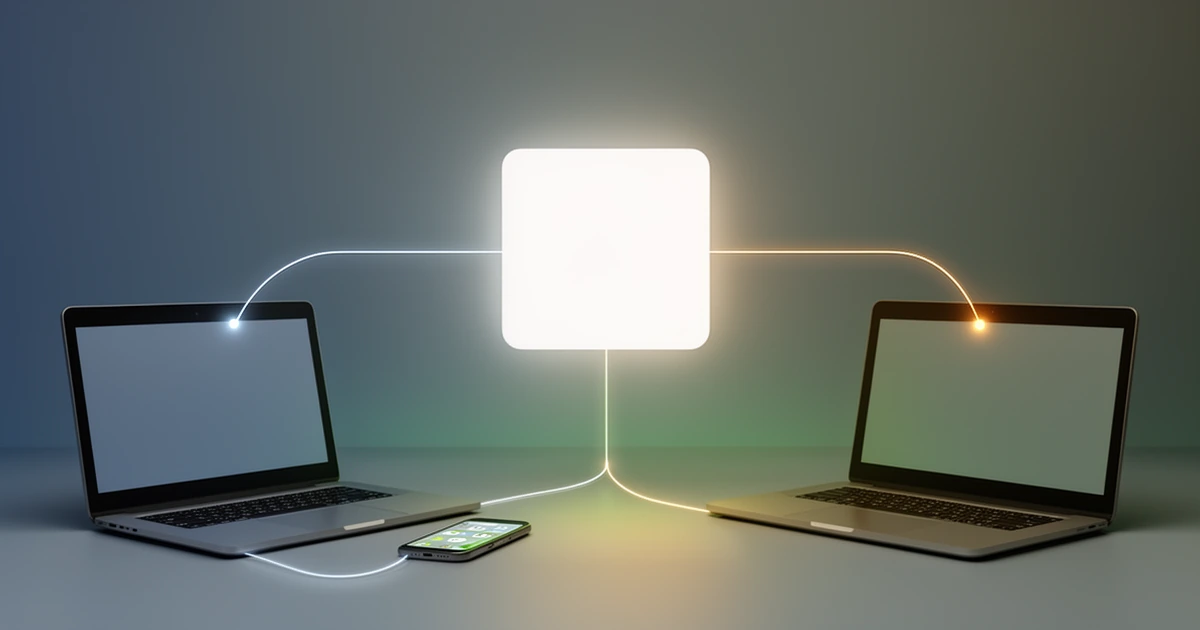
The goal of unified device identity is to present users with a single, stable entry point.
For users, the item in the device list should be the connectable object itself. Clicking on a device under an account should not require copying another controlled-end ID, asking the other party for the currently displayed remote control number, or trying to determine which of several identifiers is the most current.
For the system, unifying identity does not mean discarding underlying IDs. The database can still retain external remote control IDs, registration sources, client versions, and historical mappings, but the frontend and connection APIs should use a single canonical host ID.
This approach yields three direct benefits.
First, the connection path is shorter. Users can connect directly from the device list without needing secondary confirmation.
Second, troubleshooting is clearer. Logs, authorizations, online status, and remote control addresses are all organized around the same host ID, preventing issues from being scattered across multiple identifiers.
Third, migration is safer. When clients are upgraded, remote control libraries are replaced, or devices are re-registered, as long as the canonical host ID remains stable, the user's device relationships will not be fragmented.
Of course, identity unification must prevent hijacking. When a new client reports an ID, the system must verify account ownership, historical bindings, and conflict records to ensure that an unfamiliar device does not overwrite an existing one.
A good remote connection experience does not ask users to memorize more numbers; instead, it keeps those numbers internal to the system. Users see one device, one button, and one connection; the system handles the mapping, validation, and conflict resolution behind the scenes.